Monday, June 06, 2011

Summer Vacation Plans: Reading & Not Reading

Summer vacation is here! And I'm going to be doing this all summer. I got a bike for my birthday in December, and I have a goal to ride it more than I drive my car this summer. Despite the predictions of record heat and little rain for most of the summer, I'm very excited about riding around the neighborhood. (For those of you who recognize Jessica Fletcher, I am not hoping to run across any dead bodies on my rides.)


I have lots of other ideas for filling all my free time too. Maybe too many plans. I've been feeling very stressed lately. The end of the school year can do that to me. But I don't want my summer vacation to stress me out, so I'm not making many promises. I'm definitely taking a poetry writing workshop this summer through Inprint. I've taken several of Inprint's workshops, including a short story writing workshop last summer. I was hoping that short story would be offered again, but poetry and memoir were my choices. I chose poetry. I've done them both before and enjoyed the poetry writing more than memoir.

It won't surprise anyone who knows me to know that I have reading ideas/plans for the summer. I want to read the following:

  • Ulysses by James Joyce - I like to read a big book in the summer, and I recently decided Ulysses would be it. I probably won't start it for a week or so, but I will get to it this summer.
  • A Visit from the Goon Squad by Jennifer Egan - This is our current book club selection, my choice, and I have less than a week to read it. I read the first chapter right after we picked it in May, but I let Valerie have it first because I was reading a young adult book that I wanted to finish first. We usually can get one copy from a library, so we don't have to buy two copies, but this book is popular right now. We couldn't find it at Half Priced Books, and our library holds never came in. Our second copy should be delivered tomorrow. I'll put other books aside so I can read it by Sunday.
  • Summer of Short Stories 3 - For the third summer in a row, I plan to read one short story each day. I think I need a better name for this personal reading challenge; I've decided to call it Short Story Daily. I try to blog about them but don't always get around to it, but I'm pretty good about tweeting about the stories as I finish them. I'm going to start today with a Murakami story from The Elephant Vanishes, which was loaned to me by my new-ish friend Eddy. I've never read any Murakami but feel like I should. Hopefully, these stories are a good place to start.
  • I need to finish the previous book club selection Fortune Cookie Chronicles & Drood, which I've been reading non-stop for the last week. It's a big book, 700+ pages, but a fast read.
  • I want to read some young adult books this summer too. I usually bring a bunch home and only read one or two. We'll see how it goes.

In addition to reading, I do have some other ideas for filling my summer vacation hours. I want to catalog all our books into librarything. We have lots of books! I also want to make Valerie a Christmas stocking like my grandmother used to make. I'll use mine as a pattern/model. I think this was on my last summer project list, but I was lazy and didn't do it. I hope to not be as lazy this summer.

Well, I guess I better decide where I'm riding my bike to this morning if I'm going to go for a bike ride. I have a book on hold at the neighborhood branch of the public library. Maybe I'll go get it. Later!


Monday, May 02, 2011

Recent reading & a book giveaway goal

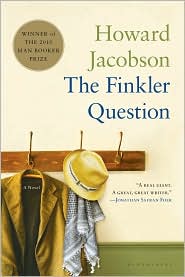
I finally finished The Finkler Question last night. I should have finished it by April 10, but like everyone else in book club, I didn't. Four of the seven of us met that night. Only three of us had started the book. I'm really not sure what I think about the book. I think I took too long to read it. If I had finished it on time, I think I would have had a lot to say about it. I generally like satire and thought the book was very funny in places, but for me it kind of fizzled in the end.

The book is only about 300 pages. So what took me so long? Lots of things got in the way, especially my reading of The Beautiful and Damned by F. Scott Fitzgerald, which I read for The Classics Circuit's Lost Generation Tour. I'm still thinking about that book often. The portrait of these two people who at first glance seem to be determined to make their own way, Gloria especially, but then just float along waiting for Anthony's inheritance to give them the impetus to act. I wouldn't even say they are treading water. Treading water indicates action and these two are reactors not actors. All the money in the world wouldn't save them from themselves either. I'm not sure that I'm making sense, but I found this book very affecting.

April was very busy at work with implementing a new library automation system, going to state library association annual conference, and teaching students how to make book trailers. May looks to be just as busy. Last year, I gave away over 200 books to students to take home for summer reading. This year, I hope to give away over 300 books, and I would love to give all 575 students at my school a book for summer reading, but I think that goal might be out of reach for this year. To reach my immediate goal of 300+ books, I have decided that I must have one more book fair. Next week, I'll be giving my summer reading presentations to all the reading classes over a period of 4 days. Then the week after that is book fair plus I have to do my end of year inventory. May is going to be jam-packed, but it will fly by and bring me to summer vacation faster.


Before I sign off, I can't forget to mention what young adult titles I've been reading lately. I'm almost finished with an advanced copy of Texas Gothic by Rosemary Clement-Moore. I usually don't like ghost stories, but I'm enjoying this one set in the Texas Hill Country. It hits bookstores in July. I've also started two other books, an advanced copy of Libba Bray's Beauty Queens (it'll be out later this month)--I love the cover!--which I've found very funny so far, and Cathy Ostlere's Karma, a historical fiction verse novel about a Canadian Indian teenage girl who returns to India with her father at the time of the assassination of Indira Ghandi. I've always been fascinated with Indira Ghandi and her legacy. I haven't read much of the book so far, and I'm not a big fan of verse novels, but so far, I am enjoying this one.

Now it's time to go to bed and read for a while. Later.

Sunday, April 03, 2011

The Beautiful and Damned - post in progress


If you came here looking for this post yesterday, I apologize for the delay. I finished reading The Beautiful and Damned Friday night, but I have not had a moment to write up my response until now. I went to East Texas yesterday to celebrate the 30th wedding anniversary of my older brother and his wife. It's hard to believe that they have been married for 30 years; it makes me feel really old and really good.

The Beautful and Damned is not a story about a happy marriage. Anthony Patch is the grandson of the very wealthy Adam Patch, an industrialist who becomes a rabid reformer in his old age. Anthony is beyond reform, a proud member of the idle rich. While he is a graduate of Harvard, he has no ambition for anything except the wait for a hefty inheritance. Gloria is a great dancer who is beautiful and fun from a rather wealthy family. Gloria's only goal in life is to enjoy it--carpe diem. Once they are married, living on Anthony's yearly allowance left to him by his parents, Anthony and Gloria set about the business of partying all the time. Even when times are bad and money is tight, they party. Eventually, Adam dies and doesn't leave them anything, and Anthony contests the will, which seems to be a neverending process and puts them in dire financial straits.

I'm not sure that I can say that I enjoyed this book, but I was completely captivated by the telling of the story despite unlikeable characters. I wanted to like Gloria especially. At first, I thought she was a spunky, free-spirited woman who was not content to behave as society expected. Then I realized that she is just a selfish beauty queen who always has to be the center of attention. Anthony is no better, talk about feckless. He only cared about being rich so that he didn't have to do anything except appear to be the kind of person he wanted to be. At times, I wondered why one or both of them didn't commit suicide and/or kill the other one.

I can't quite decide what Fitzgerald was trying to show with this story. On the one hand, I would say that he was making a case against the idle rich, but Anthony wins in the end, even though he can't enjoy his winnings. I definitely think he's trying to say something about the idea that living without a purpose is a hollow way to live, but the examples of people living with a purpose, the rabid reformer Adam Patch, Anthony's friend Richard Campbell (Gloria's cousin) and eventually his other friend Maury Noble, are just as unlikeable as Anthony and Gloria.

I have more to say, but I have to go to bed now. I'll try to update this tomorrow evening before I go to the NCAA championship game or Tuesday evening. Later.

Monday, March 14, 2011

Decisions, Decisions


I started to type this post yesterday afternoon, but I quickly decided that I would rather be reading than writing, so I stopped writing and read until time to get ready for last night's book club reading.

The decision in the post's title refers to choosing between Fitzgerald's The Beautiful and Damned and Hemingway's A Farewell to Arms. I signed on to do a post for another Classics Circuit tour: The Lost Generation Tour. I've always been a fan of both Fitzgerald and Hemingway (a bigger one of Fitzgerald), but I've not read all of their work. When I signed up to be part of this tour, I said I would read one of these works, thinking I would end up choosing whichever one wasn't being done by another blogger. Yesterday, I looked at the tour schedule and saw that someone else is doing both of the books. No help!

So I started to type a blog post, thinking that I would write myself into a decision. As you already know, I went to read instead. The plan was to read a chapter or two of each to see which one drew me in the fastest. One problem with this plan: the first chapter of Fitzgerald's book is about 30 pages long whereas Hemingway's is 2 pages. Before I finished the first chapter of the Fitzgerald book, I decided that it will be my Classics Circuit read, but I might read and post about both books if I can find the time. After all, I am on Spring Break this week and have no plans for anything other than reading, writing, and riding my birthday bike.

Another decision.
Previously, I posted about trying to decide what big book to read next. I decided to read Drood, mainly because I was reminded that it had been a birthday present from Valerie. (I think I should read the books she gives me within at least two years of the giving.) Unfortunately, I haven't read much so far, just over 100 pages, but I have enjoyed the voice of Wilkie Collins as the narrator. I have no idea how factual the character of Collins or Charles Dickens is in thoughts, actions or mannerisms. I have listened to part of Collins' The Woman in White and read and enjoyed a few Dickens books, but I'm not an obsessive fan of either, so historical accuracy won't play into my enjoyment of the book. The book is all about plot, or so it seems, and I was thinking that I might stop reading it and pick another of the big books because I desired something more than a plot-based book. However, now that I've started The Beautiful and Damned, I think I'll keep reading Drood. As a matter of fact, today looks to be a rainy, gloomy day, a day that befits the reading of a book like Drood. I think I'll go read for a while now. Later.

Sunday, February 13, 2011

What should I read next?


I spent most of this beautiful day, sitting in the backyard finishing my reading of The Privileges by Jonathan Dee. I really didn't like the book. I kept thinking that maybe I just couldn't like a book about wealthy people who, for the most part, had no real struggles, and when the did have struggles, they bought their way out of them. But I know that's not true, I've read and enjoyed books about ultra-wealthy people before, but Dee's depiction of the Moreys never engaged me enough to become sympathetic to any of the characters. Even when I finally thought something exciting/interesting would happen, I would be disappointed with a too easy, too fast resolution to the conflict--money really does buy everything for these people. Although I thought the writing was good, it wasn't so good that I wanted to keep reading. I finished the book because I have a difficult time not finishing books and because it was a book club selection. We met tonight to discuss the book, and I wasn't the only one who didn't like it. Only a couple of members liked the book, but neither of them loved it.

After we finished discussing The Privileges, we picked out our next read from a list of four books, one of which was immediately eliminated because a member had already read it. We settled on a The Guernsey Literary and Potato Peel Pie Society. I'm not very excited about the choice; I would've preferred The Lotus Eaters. The other choice was The Glass Castle, which every other book club in the world as probably already read. I really dislike memoirs even though I recently read and loved Just Kids, so I was just glad that everyone else didn't want to read it. Surprisingly, no one even named it as one of their top two choices.

Before I start the The Guernsey Literary and Potato Peel Pie Society, I am going to start a new big book. To me a big book is any book with more than 500 pages. I've narrowed my choices down to these six books, all of which I have owned for some time now:
Which one should I read next?

Wednesday, February 02, 2011

My Bookprint

In the course of preparing for my upcoming book fair, I came across Scholastic's You Are What You Read site today. One of the things you can do on this site is share your bookprint, the five books that most influenced you. I always have a problem with these kinds of lists. Just the other day, a student asked me to name my favorite book of all time, and I really couldn't answer the question quickly or easily. I have read and loved so many books, and I have difficulty articulating how the books that I've loved have influenced me.

But I do like the idea of identifying my bookprint, so I'm going to try to pick the 5 books that influenced me the most. Here is my initial list, in no particular order.
  1. The Autobiography of Malcolm X - I feel like I learned much American history from this book, history that I was never taught in school. This book changed my way of thinking about mainstream perceptions and depictions of people who live outside the mainstream. (Does that even make sense?)
  2. Beloved by Toni Morrison - I have read this book so many times, first as a reader then as a grad student and then as a teacher. I love the use of language and the way Morrison starts in the middle and fills in the blanks as the story progresses.
  3. The Handmaid's Tale by Margaret Atwood - Another book that I've read multiple times. This is my all-time favorite dystopia. I love how Atwood depicts the possible outcomes of extreme religious right ideals. Every time I read a YA dystopia, I see the influence of The Handmaid's Tale in it, even if the book has nothing to do with religion or abortion.
  4. Superior Women by Alice Adams - I keep telling myself that I should reread this book to see if it's as great as I remember it. I think this was probably the first novel that I read that I would classify as feminist. As I recall, the women in this book, one of them in particular (can't remember which one right now), were determined to be more than just wives and mothers.
  5. The Women of Brewster Place by Gloria Naylor - I've read this book two or three times. I love Naylor's story of these women who are from different generations and different socioeconomic status but who all have to deal with not just racial prejudice but also gender bias and bias among themselves.
For now, I'm going to let this list simmer. Because even as I was making the list, I was thinking of other books that I might include. Notice there are no children's books on the list. I can't really remember ever not being a reader, but I never had a favorite kids book, a book that I read multiple times like I see so many kids doing.

What is your bookprint? Can you name the five books that influenced you the most?

Monday, January 31, 2011

Lysistrata - Better late than never, I hope.


Dang it! I just realized that my Classics Circuit Ancient Greek Classics post was supposed to be posted on Sunday. All this time, I thought that I had been assigned to post on January 31. Well, I hope this post is worth the wait, if anyone comes back to read it a day later.

For this tour, I wanted to read something new, so I chose Lysistrata by Aristophanes. I was a high school English teacher for fifteen years, and I taught some of the tragedies several times. I was familiar with the premise of Lysistrata, but I had never read it or seen it acted on the stage (and I'm not sure that I'd want to now).

I thought that I had the play in an old Norton Anthology or other literature textbook, but I couldn't find it. Rather than purchase a copy or check one out from the library, I decided to read the book on my computer and iPhone for free. I got the book from Project Gutenberg, which means there were few footnotes and only a brief but interesting introduction/commentary.

One of the things that I like about Shakespeare's comedies (and even some of his tragedies) is his use of sexual innuendo and bawdy jokes. Yes, sometimes the puns are groan inducing, but they are generally so well-placed that I can't help but laugh a little. I don't know if some of Aristophanes' skill with humor is lost in this translation or not, but the phallic humor wore on me.

The play's premise is that the men of Greece spend too much time away from home, at war with one another. Lysistrata hatches a plan to bring about peace. She convinces all the women to refrain from having sex until the men agree to sign a peace treaty. Of course, the women resist her arguments at first but eventually agree. The women take control of the citadel and threaten to take over the treasury before the men begin to rebel. Lysistrata's plan works but not before some of the women threaten to give up and the men threaten to beat and even burn the women out of the building.

As I've already said the play is full of phallic jokes, obvious and sophomoric, jokes that only the prudest wouldn't see coming. For example, the men take a stand, a naked stand, against the women: "Let each one wag / As youthfully as he can, / And if he has the cause at heart / Rise at least a span." And later, when the Spartan and Athenian men are about to agree to a peace treaty, the Chorus chimes in with "The situation swells to greater tension / Something will explode soon." Ha! Ha! (To be completely honest, I did laugh at some of the dirty jokes in the first few pages of the play, but after a while, I just got tired of them.)

As a feminist, I feel like I should like this play. I'm sure it has a lot to say about gender and power, but I thought it was so obvious and simplistic that I couldn't really get engaged in the story or the characters. If I were teaching this play, I would research the status of women in ancient Greece, and I would probably find my way to liking it. I didn't do any research before or after I read it, and I didn't read the other Classics Circuit Ancient Greeks post on the play because I didn't want to have other people's ideas in my head when I read the play for the first time. Maybe I'll come back and update this post after reading the other post on this play. For now, though, I'm done. Later.

Lysistrata post coming later today

Today is my turn for The Classics Circuit's Ancient Greek Classics tour. Instead of finishing reading and typing up my post yesterday, I finished reading Patti Smith's Just Kids, a great book which I will post about after I post about Lysistrata. I will make time to finish reading and type up the post at work today, but I won't be able to upload the post until I get home from work.

Have a good Monday!

Monday, December 27, 2010

My Year of Reading - A List

Oh, how the time does fly! I can't believe it's been almost three months since my last blog post. It's not like I haven't been reading interesting books or haven't had interesting ideas for blog posts. I just haven't been making the time for writing, and I have no excuses for it except laziness and procrastination. Reading is about the only thing that I don't procrastinate in doing.

I read 46 books this year plus half of two others. I could only bear half of American Gods, and I'm halfway finished with Middlemarch, which I will finish in the next week or so. My list is below.

Book club selections
  1. Loving Frank by Nancy Horan
  2. Motherless Brooklyn by Jonathan Lethem
  3. Monster of Florence by Douglas Preston and Mario Spezi
  4. The Hour Between by Sebastian Stuart
  5. Less Than Zero by Bret Easton Ellis
  6. The God of Small Things by Arundhati Roy
  7. Cutting for Stone by Abraham Verghese
  8. Never Let Me Go by Kazuo Ishiguro
  9. Sag Harbor by Colson Whitehead
  10. Where Men Win Glory by Jon Krakauer
Other books I chose to read:
  1. The Silver Swan by Benjamin Black
  2. The Likeness by Tana French
  3. A Mercy by Toni Morrison
  4. Diamond Dust & Other Stories by Anita Desai
  5. Innocent Blood by P.D. James
  6. Housekeeping by Marilynne Robinson
  7. The Year of the Flood by Margaret Atwood
  8. American Gods by Neil Gaiman (only read 1/2)
  9. Middlemarch by George Eliot (still reading, half finished)
Kids/young adult books:
  1. Matched by Ally Condie
  2. Jumpstart the World by Catherine Ryan Hyde
  3. Nothing by Janne Teller
  4. True Confessions of Charlotte Doyle by Avi
  5. The Eternal Smile: Three Stories by Gene Luen Yang and Derek Kirk Kim
  6. Burnout by Rebecca Donner
  7. Sweet Treats & Secret Crushes by Lisa Greenwald
  8. One Crazy Summer by Rita Williams-Garcia
  9. Kendra by Coe Booth
  10. You by Charles Benoit
  11. Forge by Laurie Halse Anderson
  12. Pedro and Me by Judd Winick
  13. Rose Sees Red by Cecil Castelucci
  14. Mockingjay by Suzanne Collins
  15. Out of Mind by Sharon Draper
  16. Bamboo People by Mitali Perkins
  17. On Pointe by Lorie Ann Grover
  18. Liar by Justine Larbalestier
  19. Will Grayson, Will Grayson by John Green & David Levithan
  20. Debbie Harry Sings in French by Meagan Brothers
  21. All the Broken Pieces by Ann Burg
  22. Thirteen Reasons Why by Jay Asher
  23. Ruined: A Ghost Story by Paula Morris
  24. Thirteen Days to Midnight by Patrick Carman
  25. The War at Ellsmere by Faith Erin Hicks
  26. The Storm in the Barn by Matt Phelan
  27. Fancy White Trash by Marjetta Geerling
  28. Understanding the Holy Land by Mitch Frank
  29. When You Reach Me by Rebecca Stead
Hopefully, I'll find the time this week to blog about which were my most favorite and least favorite reads as well as my reading plans for the new year. For now, though, I'm going to bed to continue my reading of Middlemarch, which I'm thoroughly enjoying. Later.

Sunday, October 03, 2010

A Beautiful Day! (and a few words about reading)


Geez! The time really does get away from me. I can't believe that it's been almost a month since I've posted anything here. I've been doing lots of reading but not much writing about it.

Before I start going on about the books that I've read recently, I have to share what a beautiful day it was here in Houston. Check out these photos from the day. Valerie and I went to the final Astros game of the season, something that has become a kind of tradition for us. Before the game, we decided to eat at Market Square, a recently re-opened park in downtown. It was a perfect day to eat outside and a perfect day for the roof to be open at Minute Maid. To top it off, the Astros ended the season with a win against the Cubs. Yea!!

After the game, I cooked vegetable soup (well, Valerie did add some seasonings, but I did all the peeling and chopping) and baked cornbread. Both were delicious! And we have leftovers for lunch tomorrow and there was enough to freeze too. A satisfying ending to another good weekend in my good life. :-)

Now for those few words about reading. I think that after having read so much this summer that I kind of lost momentum once I started back to work. I have actually read more YA books in the past two months than adult books. But one reason for that was that my book club picked Cutting for Stone by Abraham Verghese, a very long book, to read for our September meeting. I had to put almost everything else on the back burner for a few weeks to get it read, and I still didn't have it quite finished in time for our meeting. I have finished it since then, however.

The novel is narrated by Marion, a twin whose mother died in childbirth. His mother was a nun from India and his father a doctor from England, both of whom were working in a hospital in Ethiopia at the time of the birth. I really enjoyed most of the book, and I thought the book had enough great characters for several books. BUT I was a bit annoyed by the first person omniscient point of view. At times, I read the book as if Marion was relating what had been told to him and could accept that the teller(s) were able to remember their exact thoughts as well as feelings, but other times, especially late in the story when Marion is in a coma, I just couldn't accept his omniscience. In the end, though, I really did like the story that Verghese told.

After their father abandons them and the hospital, Marion and his twin brother Shiva are adopted by two other Indian doctors and have a rather idyllic childhood despite the poverty and political struggles that occur in their adopted country of Ethiopia. Both of the twins become doctors.

Reading this book, I started thinking about other books that I have read about doctors. I really couldn't come up with a very long list. Then I came across a post about five books of doctors novels on A Commonplace Blog. I had only read one of them, Waiting by Ha Jin, but the post included a link to Literature, Arts, and Medicine Database, which contains a very extensive, annotated list of books. Thanks to this list, I was able to add a few more.

Here's my list of doctor novels:
  • Of Human Bondage by Somerset Maugham.
  • Coma by Robin Cook. I know this is not great literature, but I think this might be one of the non-classic adult book that I read. My mom loved popular fiction thrillers, and I'm fairly certain that I got this book from her when I was a freshman or sophomore in high school.
  • Cider House Rules by John Irving.
  • Alias Grace by Margaret Atwood.
  • Tender is the Night by F. Scott Fitzgerald
  • Love in the Time of Cholera by Gabriel Garcia Marquez
  • Frankenstein by Mary Shelley
  • Dr. Jekyll and Mr. Hyde by Robert Louis Stevenson
  • Middlemarch by George Eliot. I haven't finished this yet and don't see it as a doctor novel, but according to the blog post that I mentioned above, a Dr. Lydgate ends up being a very important character in the novel.
If you can recommend or remind me of others, please do. Now, I think I'll go to bed and read some of Middlemarch. Later.

Wednesday, September 08, 2010

Who am I kidding?

In the past several years, I've started four writing workshops and finished three, poetry, personal essay, and short story. The short story one, I took this summer. I mostly thought my story sucked, but I didn't think it was the worst one of the group, and I did think that it held promise. Despite that feeling, I haven't even tried to revise it or really tried to write another one since. I have had some ideas about possible plot elements and characters that I've jotted down here and there, but I just haven't made the time to really do anything about any of them.

Things I know
I have to decide that I'm going to be a writer and make time to write. I used to stay up late and blog a lot, but now that I try to go to bed early, I don't blog nearly as much.

I waste way too much time on the computer playing card games while I half watch TV.

I can make all the plans that I want to, but the chances of me carrying them out are very slim.

Of course, I know a lot more about a lot of other things, but I won't bore you with more.

(I started this post early this morning, and I'm finishing it after dinner while I get caught up on Project Runway.)

How can I make my writing work? ;-)
I think I have to create a schedule to make myself find time to write. Last May, when I first started getting up at thirty minutes earlier, at 5:00 every morning , I thought I might have time to write each morning. I don't know what I was thinking because I'm not a morning person, never really have been. I don't really have a regular lunch time or conference period time at work, so writing at work on a regular basis. So the only time left is at night. Thanks to Valerie, I now go to bed much earlier than I used to. I sleep better and more and really feel better most mornings even though I do miss staying up late sometimes. So where does that leave me? I could write from 7:00-8:00 or 8:00-9:00 or 7:00-9:00. Should I start with an hour and add a second hour after a while?

It's funny how I can find all kinds of time to read, but I can't find time to write. I have to make a decision and establish a schedule and make it a habit or give up on the idea all together. For now, though, it's time for bed. Later.

Monday, July 12, 2010

"Every individual existence revolves around mystery..."

I've been very lax about my daily reading of short stories this summer, but I'm going to try to be better during the second half of my summer vacation. I can't believe it's already half over! I'm feeling the need to get things done for the next four weeks, things that I had planned to do this summer. One of those things was to read a short story every day and tweet/blog about it.

This morning I read Anton Chekhov's "The Lady with the Dog." I'm not sure if I've ever read any of Chekhov's stories or plays before. In addition to being a constant reader, I majored in English as an undergrad and almost completed a masters in literature, so you would think that I had read something of his, but I can't remember ever doing so. My point is I've never studied Chekhov. I have read other Russian writers, and I thought this story pretty typical of nineteenth century Russian literature. (Please, correct me if I'm wrong.)

I enjoyed reading this story, but I wasn't surprised by its outcome. I did, however, find a statement in it that I really liked. Gurov, the main character, is a philanderer, and at one point he thinks "every individual existence revolves around mystery..." I think that a lot of people might disagree with this statement, or at least might be upset by the thought of it as a reality. However, I'm not sure if anyone can ever really know everything about another individual. We all have secrets of some kind, right? Some people like to claim that what you see is what you get, but I'm not sure that is even possible. Don't we all live a persona that we've created whether consciously or unconsciously? What do you think?

I'm going to ponder on this for a while and maybe I'll write more about it later. For now, I need to get some other things done. Later.

Saturday, July 10, 2010

Giving up on American Gods (#1b1t)


I really don't like to give up on books, but I think I have to give up on this one. I'm not a fantasy fan per se, but I'm not sure that's the problem. I feel like the book is not that well written and it's all pretty obvious. I only chose this book because I wanted to participate in One Book One Twitter. However, ss soon as I saw many of the tweets about the book, I was reminded of why I don't read popular fiction very much. I am an admitted book snob and have no time for obvious questions/comments, but I'm not so horrid a snob as to post snarky comments, at least. Although that might have made my reading of this book more fun. ;-)

I have given American Gods a real chance. I have read seven chapters, so I'm not giving up without a fight. I liked the first chapter and was completely surprised by the grotesque ending of that chapter, so I thought that this book was going to be very interesting and fast paced, but I think the book went down from there. Despite it being a fantasy, there's nothing really new here. Sure, I'm not familiar with all the gods presented, but I am too familiar with some of the motifs and symbols. (Are symbols and motifs the same things? I can't remember right now.) Black birds, gangster type men in black limos with tinted windows, light vs. dark, ambiguously good guys vs. bad guys, etc. Even most of the commentary about American society seems tired.

I think the last straw was the scene where Shadow is grabbed by some men in a black truck in a restaurant parking lot and then he's in what seems like an interrogation room being questioned about the gods. The two men, Mr. Wood and Mr. Stone, doing the questioning are wearing dark suits and have dark hair and shiny shoes. This scene just seemed and felt a little too Men in Black to me, and I've never even seen the whole movie. I did finish that chapter and read one more, but now I think that might be as far as I care to go with this book.

I'm kind of sad about giving up on this book because so many people, including friends of mine, really admire Gaiman's work, and I want to share in that admiration. So, I'm not giving up on the author completely. I'll try at least one of his other books before I give up on him altogether. And maybe I'll read another chapter of American Gods here and there and eventually finish it. I haven't removed the book to the bookshelf yet or even removed the bookmark from it, but I haven't picked it up to read in several days. I have read other things this week instead. I started three different books Footnotes in Gaza, Never Let Me Go, and Middlemarch. I'll probably finish at least two of those next week. So for now, I'll say goodbye to American Gods and One Book One Twitter. Later.

Thursday, July 01, 2010

Toni Morrison made me cry


When I finished reading A Mercy this morning, all I could think was "WOW!" I got up from the dining room table and walked into the living room to get my phone so I could tweet that "WOW!" As I was typing out the tweet, I just started sobbing. I mean crying really hard. I cried for at least five minutes before I could get myself under control. I haven't had that kind of visceral reaction to a book in a very long time.

I love Morrison's work. She is one of my two favorite authors, but I was still stunned by the beauty and sadness of this short novel. How could she say so much in less than 200 pages? I'm a relatively slow reader, but I read this book very fast, starting it yesterday afternoon. It's a real page turner. She interweaves several stories in this novel about a small group of slaves and their owners in seventeenth century America. There is one central thread that holds the stories together, but I never felt impatient when it was interrupted to tell one of the other story lines.

This novel is on its surface a story about slavery, but its also an indictment of religiosity. Both the Papists and the Protestants are shown to perpetuate not just the use of slaves but the racism that allowed it to exist. In addition, the novel is about identity, jealousy, and cruelty, which is too/most often the result of jealousy, I think.

I just kept wondering how people could be so cruel to other people. How does a group of people ever come to believe that they are automatically superior to another group of people and that the proof of their superiority is in the color of their skin? Even the benevolent wife of the benevolent slave owner becomes cruel in the end, which reminded me of Frederick Douglass's Narrative and his descriptions of the dehumanizing effect of slavery on the slave owner. Morrison touches on this idea in Beloved also.

At one point in the novel, someone says or thinks something like "we don't shape the world; the world shapes us." If that's true, then what kind of sad, cruel world do we live in? I'm not trying to be a Pollyanna here. Are humans inherently cruel? I don't understand why someone would ever be cruel to another human being, and I know that I've been guilty of cruelty at some point, probably more than one, in my life. Whether my cruelty was consciously intended or not doesn't change the fact that it happened. Whether I felt my actions provoked or reasonable doesn't change anything either. Maybe that knowledge is one reason this book affected me so.

I've read most of Morrison's works more than once, and I feel like I should read this one again very soon. I wish that I was still teaching AP Literature because my students would be reading this book in the upcoming school year. Now, I'm going to go to bed and read, but I'm not sure what I'll read because I think that no matter what I read tonight, it'll be a disappointing after having just read A Mercy. Later.

Friday, June 18, 2010

Summer of Short Stories 2

I started this repeat project kind of late, but I'm planning to read one short story each day for the rest of my summer vacation and tweet and/or blog about the stories. I will at least tweetthe author and title of each one. Last summer, I read several whole books of short stories and some other random ones, which is my plan for this summer too. I started reading Anita Desai's Diamond Dust last week, but I wasn't sure then if I was going to repeat the daily reading and didn't keep it up all week. This week, I decided that I had enjoyed the reading and the structure of doing it last summer and should do it again.

I've never read any of Desai's work before this book. I have read her daughter's Booker Prize winning, The Inheritance of Loss, and I bought Diamond Dust when I attended a reading by both authors a couple of years ago. Today, I read the fifth of the nine stories in this book, "The Man Who Saw Himself Drown." I'm not sure I completely understood the story. The story started out with a third person narrator, detailing the movements of an older man on a business trip. After dinner one evening, he goes for a walk and eventually sees a drowned man being pulled out of the river. It's him. Most of the rest of the story is told from the drowned man's spirit's(?) point of view. At first the man doesn't believe he has really died. I can't decide if this story is just a bittersweet story about death or if it's a story about the connection or disconnection between body and spirit. I'm not a very spiritual person, and I think that might be hindering my perception of this story. I guess I'll just have to keep thinking about it for a while.

I am enjoying Desai's writing. In this story I was really struck by a couple of passages, one of which I think might hold the key to the story. But first, this one from the beginning of the story when the man enters his hotel room: "He tossed his briefcase into the armchair--there, now the room knew someone had entered it and made it his own--went into the bathroom to wash." I love the idea that a hotel room is always waiting for life--it only lives when it's inhabited. Kind of makes me feel sad for hotel rooms. :-) And I guess in a sense hotel rooms are kind of sad, temporary dwellings. Maybe Desai is comparing the hotel room to a body inhabited by a spirit. Hmmm.

The key passage in the story, I think, is this one from the end of the story after the man has accepted his death:
It seemed to me that by dying my double had not gifted me with possibility, only robbed me of all desire for one: by arriving at death, life had been closed to me. At his cremation, that was also reduced to ash.
Maybe the story is about the death of the spirit and how once it dies a body can't go on living. At the beginning of the story, the man was exhausted with his life, his work life at least, but maybe that was the beginning of the death of his spirit. I don't know. Maybe I'm trying to hard. Maybe I should just enjoy the story and let it's meaning percolate in my brain whether I ever come back to it or not. I'm going to go read something else now. Later.


Wednesday, June 16, 2010

Summer reading plans

Not surprisingly, I've missed at least a month of Monday missives. I could give some excuses about moving, end-of-school-year stress, and even having a bad sinus infection this week, but they would just be excuses. I've thought about blogging lots of times, but I've just been lazy about doing it. Once again, I'll make a vow to try to post more regularly. I don't work in the summer, so I should have plenty of time for blogging.

So even though I'm half way through the second week of my summer vacation, I thought I would lay out my reading plans. I finished Housekeeping by Marilynne Robinson today. If I hadn't been sick for the past few days, I probably would've finished it faster. I'll write more about it later, but I need to let my thoughts gel for a while.

I am currently reading Innocent Blood, one of P.D. James's older books, and Diamond Dust, a book of short stories by Anita Desai. Before the summer started, I intended to have a second Summer of Short Stories, and I even read one on each of the first two days of my summer vacation, but I didn't tweet or blog about them. Maybe I'll kickstart that project tomorrow. In addition to these books, I started a few books at work before the school year ended:
I plan to finish all three of these, and read many more, including some/all of the following:
I also brought home several young adult books to read this summer, but I won't list them now. All this writing about books makes me want to go read. Later.